50Plano Luxury Editorial
In Collin County, luxury is rarely about the loudest room, the longest line, or the most frantic acquisition. It is more often expressed in pace, continuity, private discernment, and the quiet confidence of people who already know what quality feels like.
That is why the recent Audemars Piguet x Swatch Royal Pop launch is so interesting.
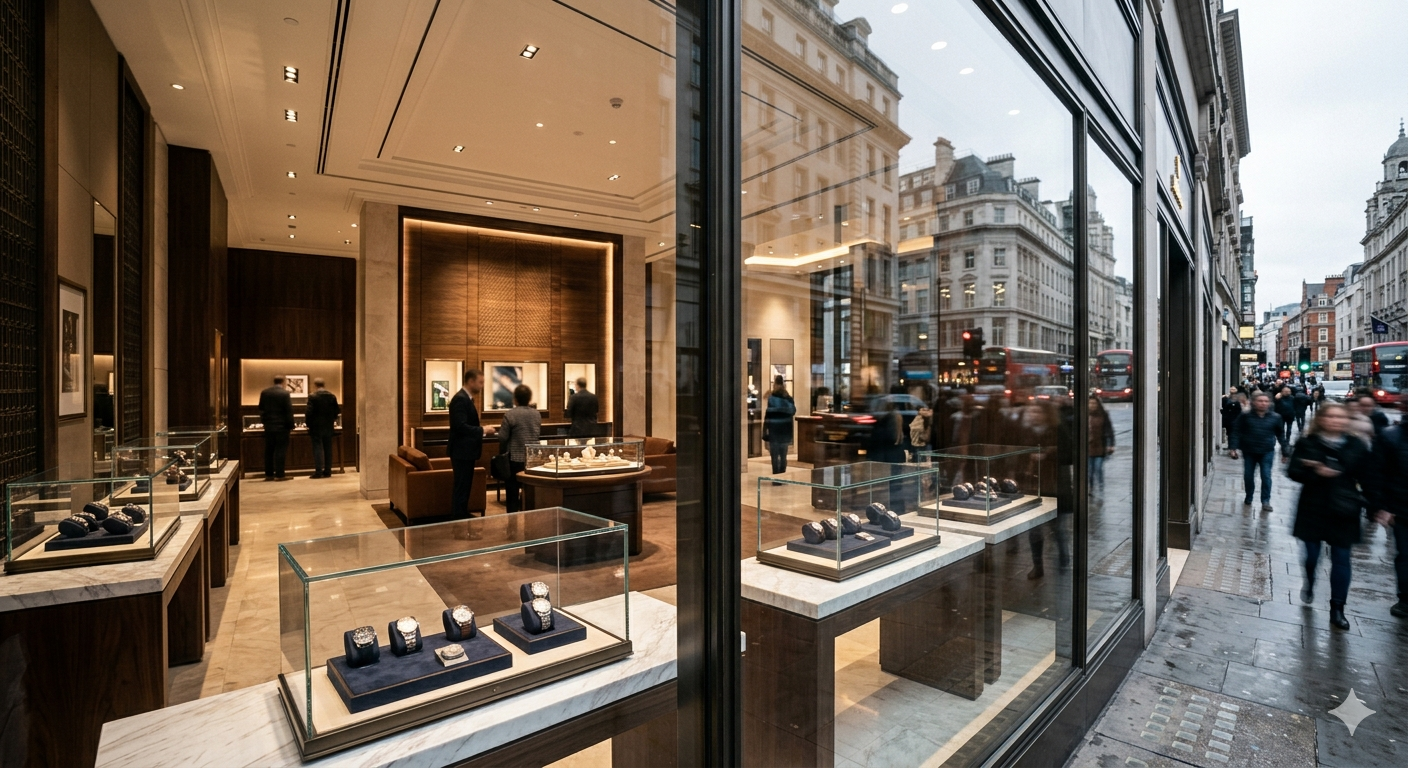
On the surface, it looked like another global hype moment: a famous luxury name, an accessible price point, limited retail distribution, long queues, resale speculation, and scenes of disorder in some cities. Reuters reported store closures, long lines, brawls in several markets, and a powerful resale surge around the $400–$420 watches. Swatch also reported enormous digital attention around the launch, including billions of social-media views.
But beneath the crowd-control footage sits a more refined question: when a serious luxury house lends its design language to a mass-access object, does it become more culturally alive—or less luxurious?
For the 50Plano audience, the answer is not as simple as “good for business” or “bad for the brand.” It depends on whether the collaboration expands the mythology of the brand or merely converts it into merchandise.
The Collaboration Was Not Random
Audemars Piguet did not attach itself to Swatch by accident. The Royal Pop collection was officially positioned as a collaboration that reinterprets the codes of AP’s Royal Oak through a disruptive pocket-watch format, inspired by Pop Art. AP described the project as bringing together creativity, audacity, and haute horlogerie.
Swatch, for its part, described the Royal Pop collection as a Bioceramic pocket watch line merging the avant-garde design language of the Royal Oak with Swatch’s 1980s POP concept. The watches are powered by a hand-wound version of Swatch’s SISTEM51 movement and sold only through selected Swatch stores, with purchase limits.
That matters because the product was not positioned as an inexpensive Audemars Piguet. It was positioned as a Swatch object borrowing AP’s most recognizable visual language.
That distinction protects AP—somewhat.
In luxury, separation is everything. A guest house can be relaxed if the main residence remains impeccable. A casual weekend car can be playful if the primary collection remains disciplined. A collaboration can be charming if the maison does not confuse accessibility with equality.
The issue is not whether a $400 object can coexist with a six-figure watch. It can. The issue is whether the lower-priced object borrows too much sacred architecture from the higher-priced one.
The Royal Oak Is Not Just a Watch
The Royal Oak is not merely a product in AP’s catalog. It is one of the most important design assets in modern watchmaking: octagonal bezel, visible screws, integrated-sports-watch attitude, and a visual vocabulary that made steel feel aristocratic.
That is why the Swatch collaboration created tension.
If AP had lent Swatch a vague “inspired by Swiss watchmaking” concept, the risk would have been minor. But Royal Pop leaned into the Royal Oak’s most recognizable codes. That made the collaboration powerful…and potentially dangerous.
The power came from immediate recognition. Even casual watch observers could see the AP reference. The danger came from overexposure. When an icon becomes too easy to reference, too easy to photograph, too easy to flip, and too easy to crowd around, the aura can begin to thin.
Luxury is not just scarcity. It is protected meaning.
The Chaos Was the Wrong Kind of Attention
The launch generated extraordinary visibility. From a marketing standpoint, it worked. People talked. Resale markets reacted. Financial media covered it. Watch media dissected it. Social media amplified it.
But luxury attention is not always luxury value.
The Financial Times reported that the Royal Pop launch was overshadowed by disorder in some markets, including police interventions, store closures, and backlash from watch enthusiasts. Business Insider similarly framed the collaboration as AP walking a fine line between cultural hype and brand cheapening.
That is the uncomfortable lesson: hype can make a brand visible while making the experience feel less elevated.
For Swatch, that may be acceptable. Swatch thrives on democratic design, pop energy, collectability, and mass enthusiasm. A queue outside a Swatch store is consistent with the brand’s cultural rhythm.
For Audemars Piguet, the calculation is different. AP’s core clientele does not merely buy objects. They buy discretion, memory, relationship, waiting, boutique confidence, and long-term continuity. They do not need the public spectacle to validate the object.
In fact, many of them prefer the opposite.
Collin County Understands This Distinction
This is where the story becomes relevant from Plano to Frisco to Dallas and beyond.
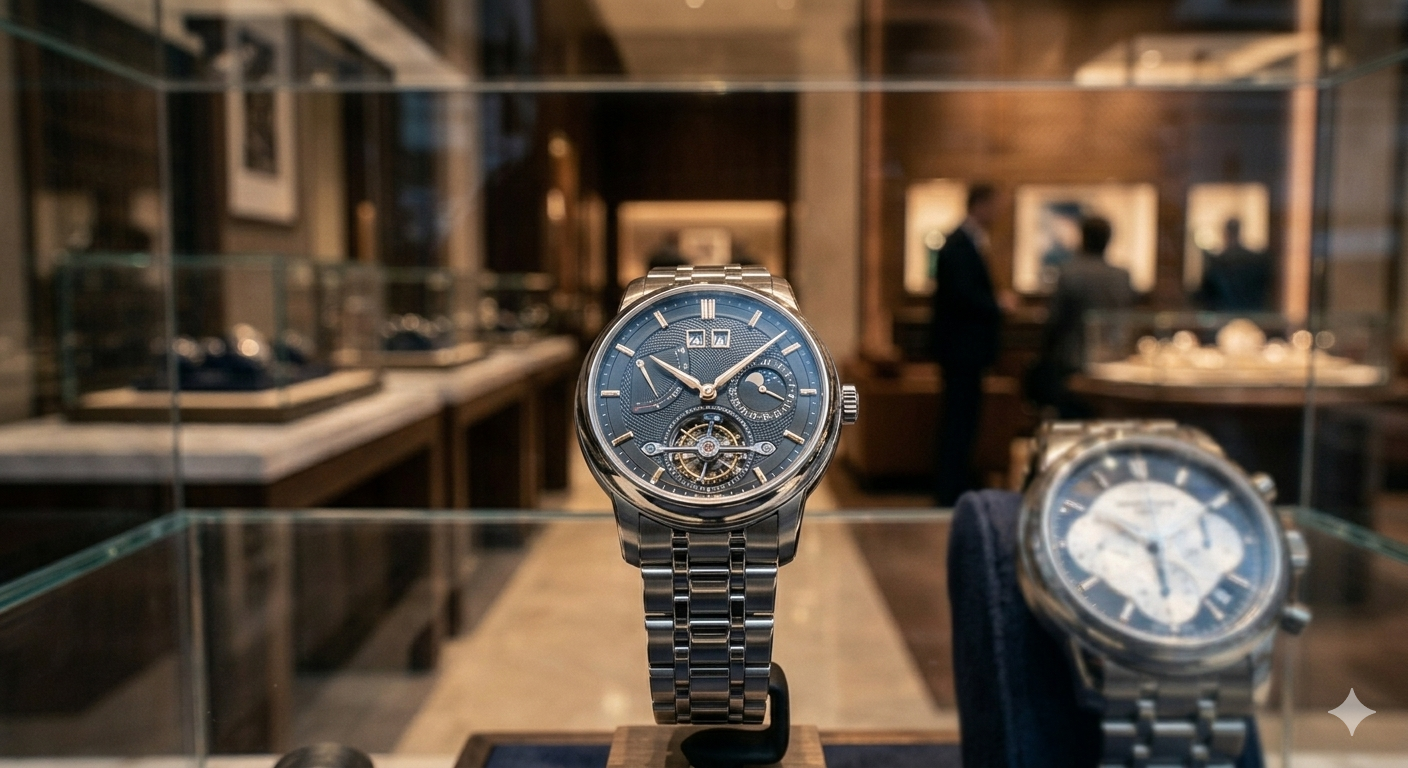
In successful North Texas circles, luxury is increasingly less about proving arrival and more about preserving rhythm. The affluent buyer in Collin County may appreciate a rare watch, a Maybach, a Gulfstream itinerary, a custom home, or a week in the Mediterranean; but the mature version of that lifestyle is not frantic.
It is curated.
The same person who can appreciate an AP Royal Oak may also understand why a Swatch collaboration is clever. But that does not mean he or she wants luxury reduced to a mall-line frenzy.
A well-lived life does not need every object to be expensive. It does, however, require every object to make sense.
That is the useful distinction. A Royal Pop could be amusing, collectible, even culturally intelligent. But if it is pursued with desperation, flipped like a sneaker drop, or worn only as proof of proximity to AP, the object becomes less interesting.
The object did not cheapen itself. The behavior around it did.
What AP Gained
AP gained relevance.
That should not be dismissed. Legacy luxury houses are under pressure to remain culturally visible without becoming vulgar. Younger consumers increasingly discover brands through collaborations, social media, fashion crossovers, celebrities, and design references long before they enter a boutique.
For AP, Royal Pop introduced the Royal Oak’s silhouette to a larger audience in a way that felt playful rather than archival. It reminded the market that AP is not a museum brand. It can still provoke.
That provocation has value.
In a world where many affluent buyers split their attention across watches, cars, real estate, art, travel, private clubs, and technology, a brand must stay present in the conversation without begging for attention. Royal Pop placed AP in the conversation forcefully.
The move also reinforced AP’s historic identity as a rule-breaker. The original Royal Oak was itself a disruption: a luxury steel sports watch with an industrial design language at a time when high-end watchmaking was still heavily tied to precious metals and classic dress codes. Royal Pop, in a very different way, continues that disruptive instinct.
What AP Risked
AP risked making its most important icon feel too available.
That does not mean AP watches suddenly become less desirable. The genuine Royal Oak remains scarce, expensive, mechanically serious, and culturally powerful. But luxury symbols are delicate. The more a symbol circulates in derivative form, the more carefully the maison must protect the original.
The larger risk is not one collaboration. The larger risk is repetition.
One Swatch collaboration can feel daring. Two or three can start to feel like licensing strategy. If AP repeatedly uses the Royal Oak as a pop-culture template, the icon could gradually lose some of its architectural dignity.
The Royal Oak should not become a logo with screws.
That is the line AP must avoid.
The Better Luxury Lesson
The Royal Pop moment is not really about whether a successful person should or should not buy the watch. That is too small a question.
The better question is this: what does the object add to the life already being lived?
For a collector with a deep AP relationship, Royal Pop may be a witty side note. For a design enthusiast, it may be a playful artifact. For a younger buyer, it may be a first encounter with one of modern watchmaking’s most important forms.
But for anyone chasing it purely because a crowd made it look scarce, the object loses its intelligence.
That is where 50Plano’s luxury perspective differs from ordinary hype coverage. The point is not access. The point is discernment.
Access asks, “Can I get it?”
Discernment asks, “Does it belong?”
What This Says About Modern Luxury
Modern luxury is moving in two directions at once.
On one side, there is ultra-private luxury: controlled experiences, discreet boutiques, quiet travel, bespoke homes, private dining rooms, advisory relationships, and objects acquired through patience.
On the other side, there is public-facing luxury spectacle: drops, queues, collaborations, resale spikes, viral campaigns, and social proof.
Both can create value. But they create different kinds of value.
The AP x Swatch Royal Pop launch shows how difficult it is for a luxury maison to touch the second world without contaminating the first. AP benefited from the spectacle, but it must remain rooted in the private discipline that made its name valuable in the first place.
Swatch can sell the moment.
AP must protect the memory.
Final Perspective
The Audemars Piguet x Swatch collaboration did not destroy AP’s luxury standing. If anything, it proved that AP’s design codes remain powerful enough to move crowds far beyond the traditional watch community.
But the chaos also served as a warning.
Luxury brands can borrow from hype culture, but they cannot live there. They can create accessible objects, but they cannot allow accessibility to become the brand’s center of gravity. They can generate attention, but attention must never become a substitute for meaning.
For the 50Plano audience, the Royal Pop story is best understood not as a watch-shopping story, but as a study in modern status.
The most sophisticated luxury consumers are not impressed by frenzy. They are interested in provenance, proportion, restraint, and whether the thing still holds its shape after the noise fades.
That is the real test for AP.
The crowds will disappear. The resale spike will settle. The videos will age. What remains is the question every serious luxury brand eventually faces:
Did the moment deepen the myth, or merely decorate it?


Leave a comment